
Staia: Cosmic Guide
MediaKey SolutionsLifestyle
4.775.00 Reviews
- Version
- 1.9.7
- Installs
- 10.00K
- Age Rating
- Everyone
Screenshots


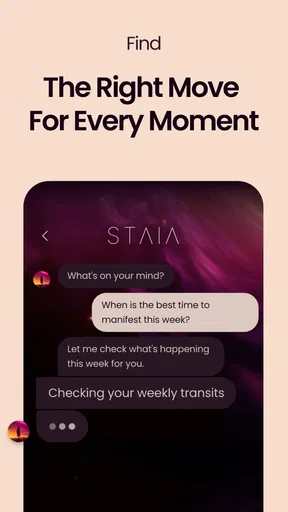
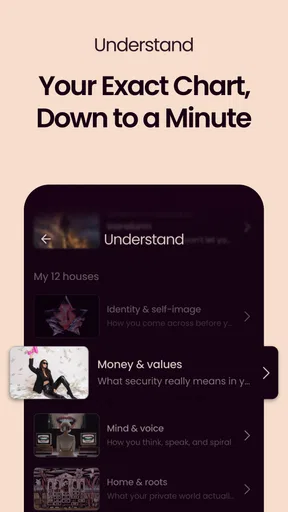


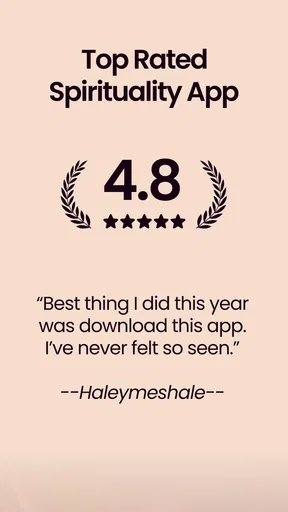
Our Review of Staia: Cosmic Guide
 Analysis by Appyee
I approached Staia: Cosmic Guide as a beginner-friendly way to explore astrology and spirituality rather than as a replacement for careful personal reflection. It is a free lifestyle app from MediaKey Solutions, and its simple store description, “Staia,” leaves the real question to the first session: can it make these subjects feel approachable without turning them into a confusing collection of mystical terms?
My impression is that it works best when I treat it as a guided companion for curiosity. I can open it when I want a moment of reflection, use its cosmic theme as a prompt for thinking about my mood or choices, and then return to ordinary life with a clearer question in mind. That makes it more useful than an app I would only open to read a quick prediction and forget.
The app has a 4.7 average from around 5K ratings, with over 10K installs. Those figures suggest that it has found an audience, but they do not remove the need to see whether its approach suits you. Staia is not likely to satisfy someone looking for a scientific planning tool, a therapy service, or a detailed replacement for a professional spiritual consultation. For a first-time user who wants a calm entry point, though, it is worth exploring.
Starting without feeling lost
The first useful thing to understand is what kind of experience Staia offers. It sits in the lifestyle space, so I would not install it expecting a game with goals, levels, or rewards. Its value comes from the way it frames astrology and spirituality as something I can return to during ordinary routines: before starting work, after a difficult conversation, or while deciding how to spend a quiet evening.
That distinction matters because first-time users often ask an app like this to make a major decision for them. I think Staia is more helpful when I use it to slow down and notice what I am already feeling. If a reading makes me think about rest, boundaries, or a conversation I have been avoiding, that reflection can be useful. If I treat every statement as an unquestionable instruction, the experience becomes less healthy and less practical.
Staia is free to install, which makes the initial trial fairly easy. It is rated for Everyone, so its presentation is intended for a broad audience. At the same time, optional purchases range from $6.99 to $79.99 per item. I would pay attention during the first session so I know which parts are immediately available and which invitations lead toward paid content. A free starting point is welcome, but it should not be confused with unlimited access to every part of the experience.
The app runs on Android from version 7.0 onward, so it can suit people using older compatible phones as well as newer devices. Its current version is 1.9.7. I would still keep expectations realistic: compatibility tells me whether the app can run, not whether every screen will feel equally comfortable on a small display or an older handset.
What I would do during the first session
After installing, I would avoid rushing through any introductory prompts. The best starting habit is to read each question carefully and answer it consistently rather than selecting whatever seems most mystical. If Staia asks for personal context, I would provide only what I am comfortable sharing and would pause whenever a screen feels unclear. There is no benefit in creating a more dramatic profile just to receive a more dramatic result.
I would also decide what I want from the app before opening the main experience. “I want a short moment of reflection this morning” is a better goal than “I need the app to tell me exactly what will happen.” That small change makes the first interaction easier to judge. I can then ask whether the guidance gave me a useful perspective, a practical prompt, or simply a pleasant pause.
One tip that made the experience more manageable was keeping a separate mental note of interpretation and action. The interpretation is the symbolic or spiritual message. The action is the small, real-world thing I choose to do afterward. For example, a reflective prompt about communication might lead me to write down what I actually want to say before sending a message. Staia supplies the pause; I remain responsible for the decision.
Finding a first meaningful result
For a new user, the first successful action should be modest. I would choose one prompt or reading, take a minute to consider it, and connect it to something already happening in my day. That could mean identifying one priority, noticing a recurring worry, or choosing to postpone an impulsive response. The point is not to prove whether astrology is right. The point is to see whether Staia helps me think with more intention.
A realistic example would be a Sunday evening when I feel scattered about the week ahead. Instead of opening several unrelated social apps, I could use Staia for a short reflective check-in. If the result highlights patience or unfinished communication, I might write a three-item plan: one task to complete, one conversation to prepare for, and one period of rest to protect. The app has not planned my week, but it has helped me turn vague tension into manageable next steps.
That workflow is one of the stronger ways to use a spiritual app. I do not need to agree with every interpretation for it to prompt a useful question. In fact, disagreement can be informative. If a message feels completely wrong, I can ask why it bothers me instead of forcing myself to accept it. This makes Staia more like a reflective mirror than an authority.
I also recommend avoiding repeated checking when the first result is not what I hoped to hear. Opening the app again and again until a more comfortable answer appears can turn reflection into reassurance-seeking. A better approach is to keep the first result, write down my reaction, and return later only with a different question. That gives the experience some structure and prevents it from taking over a decision.
Where beginners may hesitate
The language of astrology and spirituality can be unfamiliar, especially when several concepts appear together. My advice is not to search for a perfect interpretation immediately. I would first identify the plain-language idea underneath the wording: am I being encouraged to slow down, communicate, notice a pattern, or make space for something? Once I understand the everyday question, the symbolic vocabulary becomes less intimidating.
Another possible source of confusion is the difference between a general reflection and a personal conclusion. Even a message that feels striking should not be treated as proof about another person’s intentions, a medical issue, a financial decision, or an unavoidable future event. I would use Staia for journaling prompts and perspective, then use appropriate real-world sources when the decision has serious consequences.
The purchase structure can also create hesitation. Because the app is free but includes individual items priced from $6.99 to $79.99, I would never tap through a purchase screen casually. I would read the wording, confirm what is being offered, and decide whether that specific addition supports the way I plan to use the app. If I only want occasional reflection, the free experience may be enough for me. If I want deeper or more frequent material, I would first establish a regular habit before spending anything.
This is also where Staia differs from the usual alternatives. A horoscope website may be quicker for a single daily reading, while a journaling app gives me full control over my own words. A meditation app may offer more direct help with breathing or sleep. Staia’s advantage is the symbolic frame: it gives me a starting point when I want reflection but do not know what to write. Its trade-off is that the guidance may feel less concrete than a checklist, timer, or structured journal.
Making the app useful beyond the novelty
After the first session, I would build a small routine rather than trying to consume everything at once. One practical method is to use a reading as a question generator. I might write, “Where am I reacting instead of responding?” or “What deserves my attention today?” Then I would answer in my own words. This prevents the app from becoming a passive stream of predictions and turns it into a repeatable reflection exercise.
A second useful method is comparing the prompt with my actual day later. I could make a brief note in the morning and revisit it at night, not to score whether the app predicted events, but to see whether the theme helped me notice anything. Did I communicate more carefully? Did I recognize that I was tired before making a decision? Did the prompt remain irrelevant? This kind of review helps me decide whether Staia genuinely adds value or merely feels interesting in the moment.
I would also keep the sessions separate from urgent choices. If I am upset, I might use the app after I have calmed down rather than during the peak of the emotion. That small delay protects the reflective purpose. Spiritual language can feel especially persuasive when I am vulnerable, so I prefer to treat it as an invitation to think, not as permission to act immediately.
For people sharing a home or a phone with others, privacy is another everyday consideration. I would avoid entering sensitive personal stories into any reflection field unless I was comfortable with that information being stored or seen within the app environment. Staia can support personal exploration without requiring me to document every private detail. Short notes and general themes are often enough.
The app is also a better fit for flexible users than for people who want one fixed belief system. I can approach it with curiosity, skepticism, or a mixture of both. If I need strict religious guidance from a specific tradition, Staia may not be the right tool. If I want a neutral mental-health resource, I would choose a qualified wellness or therapy service instead. Its strength is the middle ground between cosmic symbolism and everyday self-reflection.
Who should try it, and who should skip it
I would recommend Staia to someone who enjoys astrology, likes reflective prompts, or wants a gentle way to create a pause in a busy day. It may also suit a person who has tried journaling but struggles to decide what to write. The cosmic framing can provide enough direction to get started without demanding a long writing session or a complicated routine.
I would be more cautious recommending it to someone who wants measurable productivity results. Staia will not replace a calendar, task manager, budgeting tool, or evidence-based health resource. It is also not ideal for anyone who feels anxious when presented with predictions or who tends to make major choices based on readings alone. In those cases, the symbolic approach may add pressure instead of clarity.
People who dislike subscriptions or optional paid content should inspect the purchase prompts carefully before going further. The free entry is useful for deciding whether the tone suits you, but the presence of paid items means I would set a personal spending limit in advance. That simple boundary lets me explore without turning curiosity into an unplanned expense.
Families may appreciate the Everyone rating, but I would still explain to younger users that spiritual interpretations are not guaranteed facts. The rating describes the intended audience, not how every person should interpret the content. A little context makes the experience more thoughtful and prevents a child from treating a general message as a fixed prediction.
My practical verdict after settling into it
Staia: Cosmic Guide is most convincing when I use it as a structured pause. It gives astrology and spirituality a place in my routine, but the value depends on what I do with the prompt afterward. The strongest workflow is simple: open it with a clear intention, read one piece of guidance, translate it into an everyday question, and choose one small action that does not depend on supernatural certainty.
Its limitations are equally clear. The experience may feel too vague for someone who wants direct instructions, and the paid items require attention from anyone trying to keep the app entirely free. It also cannot replace professional advice for serious personal, medical, financial, or relationship problems. Those are not reasons to dismiss it; they are boundaries that keep its best use in view.
MediaKey Solutions has positioned this app in a popular lifestyle niche, and the audience response is encouraging. I would not choose it because of the rating alone, though. I would choose it because I want a cosmic lens for reflection and I am comfortable remaining the final judge of what a message means for my life.
My recommendation is to begin slowly, complete one meaningful session, and wait to see whether the habit improves your attention rather than simply increasing your screen time. Staia works best when it starts a conversation with you, not when it tries to make every decision for you. For curious beginners, that makes the free first step worthwhile; for readers seeking concrete tools or guaranteed answers, a journal, meditation app, or practical planning tool will probably be a better match.
Verdict
Strengths of Staia: Cosmic Guide
- Personalized cosmic guidance makes readings feel relevant to your interests.
- Clean, calming design suits reflective moments and casual daily use.
- Astrology content is presented in an approachable, easy-to-understand style.
- Useful for building a simple routine around daily cosmic insights.
- Offers an entertaining way to explore astrology without prior knowledge.
Limitations of Staia: Cosmic Guide
- Some interpretations may feel too general for users seeking detailed readings.
- The app’s value depends heavily on your interest in astrology and spiritual content.
- Certain features or insights may require a subscription or in-app purchase.
- Frequent notifications could become distracting if not carefully configured.
- Results should be viewed as entertainment, not as a substitute for expert advice.
Similar Picks in This Category
View All
SmartThings
Samsung Electronics Co., Ltd.4.6

Google Home
Google LLC4.0

Pinterest4.2

Astrotalk - Talk to Astrologer
Astrology & Horoscope4.7

My Verizon
Verizon Consumer Group4.5

Samsung Wallet (Samsung Pay)
Samsung Electronics Co., Ltd.4.1
Frequently Asked Questions
What is Staia: Cosmic Guide, and what can I use it for?
Staia: Cosmic Guide is an astrology and cosmic self-reflection app designed to help you explore birth-chart information, planetary influences, daily insights, and broader astrological themes. It presents this information in a guided, accessible format rather than requiring prior astrology knowledge. It is best viewed as an entertainment and personal-reflection tool, not as a scientifically verified method for making medical, financial, legal, or other major life decisions.
What information do I need to provide to use Staia: Cosmic Guide?
To receive more personalized astrological content, Staia may ask for details such as your date of birth, exact birth time, and birthplace. Accurate information can improve the calculation of a natal chart, while an unknown birth time may limit certain readings. Before entering personal details, review the app’s privacy policy and account settings so you understand how information is stored, used, and whether it can be deleted.
Is Staia: Cosmic Guide free to download and use?
The app may be available to download at no initial cost, but some readings, features, or extended content can require a subscription or in-app purchase. Availability and pricing may differ between Android and iOS, as well as by country. Check the store listing and the in-app subscription screen carefully before starting a trial, especially for renewal terms, billing frequency, cancellation instructions, and whether a free trial automatically converts into a paid plan.
Does Staia: Cosmic Guide provide scientifically accurate predictions?
Staia’s interpretations are based on astrology, which is generally considered a spiritual or entertainment practice rather than a scientifically proven prediction system. The app can be enjoyable for journaling, self-exploration, and discovering symbolic perspectives, but its forecasts should not be treated as guaranteed events or professional advice. Use critical judgment when reading recommendations, and avoid relying on the app for health, relationship, financial, or safety-critical decisions.
Can I cancel a Staia subscription, and what should I check before downloading?
If you activate a paid plan or trial, cancellation is normally managed through the Google Play Store or Apple App Store account used for the purchase, rather than simply deleting the app. Check the subscription section on your device and cancel before the renewal date if you do not want another charge. Before downloading, also review permissions, privacy practices, supported devices, regional availability, and recent user feedback about billing or account management.
